
The Advanced Solution for Reading Vision & Cataract Prevention. Offered by Houston’s Trusted Eye Surgeons.
Is Refractive Lens Exchange (RLE) Right for You? Candidacy in Houston
Refractive Lens Exchange (RLE) is a powerful vision correction procedure that can dramatically reduce or eliminate dependence on glasses, especially reading glasses and bifocals, for individuals typically over 40. By replacing the eye’s natural lens with an advanced artificial lens (IOL), RLE addresses vision changes associated with aging, particularly presbyopia.
But is RLE the best option for your specific situation? Determining candidacy involves evaluating your age, vision needs, eye health, and lifestyle goals. At Berkeley Eye Center, our experienced Houston surgeons perform thorough evaluations to ensure RLE is a safe and effective choice for suitable candidates.
On This Page
Who Is an Ideal Candidate for RLE?
RLE is often an excellent choice for individuals who:
- Are experiencing presbyopia, the age-related difficulty focusing up close, typically starting after age 40 or 45.
- Are motivated to reduce or eliminate their need for reading glasses, bifocals, or progressive lenses.
- May also have moderate to high farsightedness (hyperopia), which becomes more difficult to treat effectively with LASIK as presbyopia progresses.
- May have moderate to high nearsightedness (myopia) but are perhaps not ideal candidates for LASIK or EVO ICL due to factors like age, corneal thickness, or dry eye concerns.
- Want a permanent vision correction solution that also prevents the future development of cataracts.
- Have healthy eyes apart from their refractive error.
Key Factors Considered During Evaluation
During your comprehensive vision correction consultation at Berkeley Eye Center, we assess several factors to determine RLE suitability:
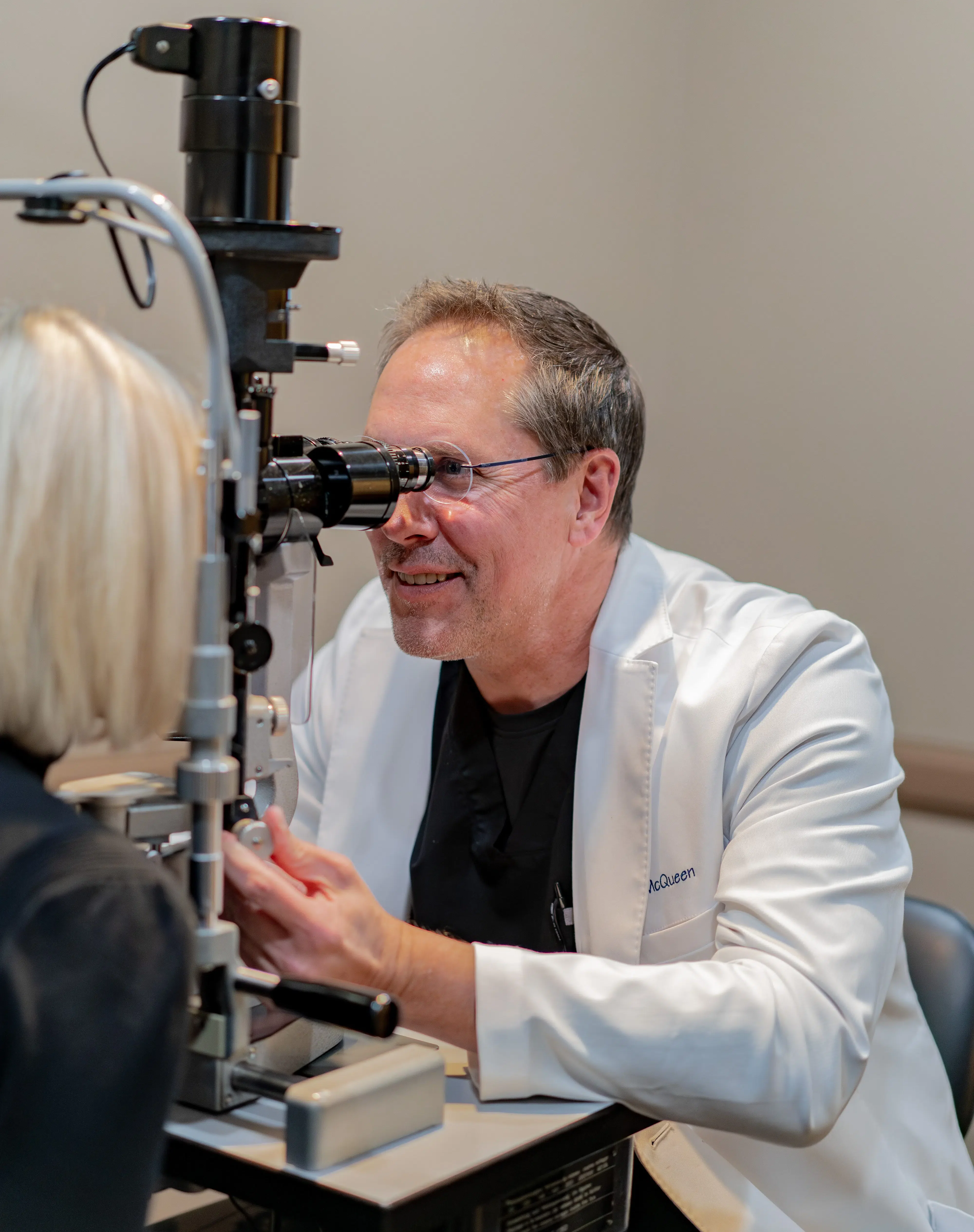
- Age and Presbyopia: This is a primary indicator. RLE is most commonly performed on patients in their mid-40s and older who are significantly bothered by presbyopia and the need for reading correction.
- Refractive Error (Prescription): We measure your nearsightedness, farsightedness, and astigmatism. While RLE can correct a wide range, it’s particularly beneficial for those with presbyopia combined with moderate-to-high hyperopia, or those with myopia who are also presbyopic and seeking spectacle independence beyond what LASIK might offer at their age.
- Desire to Reduce Dependence on Glasses: Your motivation is key. RLE is most satisfying for patients highly motivated to minimize their reliance on glasses, especially bifocals/progressives or readers.
- Cataract Status: RLE is performed on eyes with clear natural lenses. If you already have visually significant cataracts clouding your lens, the procedure is medically necessary and termed Cataract Surgery, although the lens replacement technique and IOL options are very similar. Our evaluation will determine if cataracts are present. Compare RLE vs. Cataract Surgery
- Eye Health: Your eyes must be free from conditions that could compromise the surgery or outcome, such as uncontrolled glaucoma, significant retinal disease (e.g., advanced macular degeneration), or active eye infections.
- Overall Health: Certain uncontrolled systemic conditions (like diabetes or autoimmune diseases) might affect healing and need careful consideration. Full disclosure of your health history is essential.
Realistic Expectations: Understanding the capabilities and potential limitations (like night vision symptoms with certain multifocal IOLs, or the potential need for glasses in specific situations) is crucial. This is discussed based on the chosen lens option.

Who Might Not Be a Good Candidate for RLE?
RLE may not be the best option if you:
- Are under 40-45 and not yet significantly experiencing presbyopia (LASIK, PRK, or EVO ICL are typically considered first).
- Are completely happy using reading glasses or bifocals.
- Have unrealistic expectations about achieving perfect vision without any potential need for glasses in certain lighting or for specific tasks.
- Have significant pre-existing eye diseases that could limit the visual outcome or increase surgical risk.
- Have certain uncontrolled systemic health conditions.
RLE vs. Other Procedures: Candidacy Differences
- RLE vs. LASIK/PRK: LASIK/PRK reshape the cornea and are excellent for younger patients (under 40-45) primarily correcting distance vision. RLE replaces the lens and is better suited for addressing presbyopia (reading vision issues) often combined with distance correction needs in the over-40/45 age group. RLE also prevents future cataracts.
- RLE vs. EVO ICL: EVO ICL adds a lens without removing the natural lens, primarily for younger patients (21-45) with moderate-to-high nearsightedness/astigmatism who aren’t ideal LASIK candidates. RLE replaces the natural lens, primarily for older patients dealing with presbyopia and other refractive errors.
The Importance of Your Consultation
Because RLE involves choosing an advanced IOL tailored to your visual goals, a detailed consultation is even more crucial than for corneal procedures. During your free vision correction consultation at Berkeley Eye Center, our team will:
Schedule Your Consultation to Discuss RLE Candidacy
Ready to explore if a Refractive Lens Exchange is the key to unlocking your best vision? Learn more and determine your candidacy.