
February is Age-Related Macular Degeneration (AMD) & Low Vision Awareness Month — a crucial time to focus on one of the leading causes of vision loss for Americans aged 50 and older. While age is the most significant risk factor, many people don’t realize that family history is one of the strongest predictors of developing AMD.
AMD affects approximately 20 million Americans, with that number expected to double by 2050 as the population ages. In the United States, AMD causes vision loss in 1 in 8 people over age 60.
This month, we want to empower you with the knowledge to understand your risk and the proactive steps you can take to protect your sight for years to come.
What Is Age-Related Macular Degeneration (AMD)?
Age-related macular degeneration (AMD) is a leading cause of legal blindness in the United States in persons 50 and older. It is a progressive degeneration of the macula, the central portion of your retina responsible for sharp, detailed central vision. This is the vision you rely on for reading, driving, recognizing faces and seeing fine details.
There are two types of AMD:
- Dry AMD (about 90% of cases): Characterized by the gradual breakdown of light-sensitive cells in the macula and the formation of drusen (yellow deposits)
- Wet AMD (about 10% of cases): Occurs when abnormal blood vessels grow under the retina and leak fluid, causing rapid vision loss
While AMD doesn’t lead to complete blindness — most patients retain their peripheral vision — the loss of central vision can severely impact quality of life and independence.
The Genetic Link: Why Family History Matters
While the exact causes of AMD are not completely understood, there is a definite genetic, or hereditary, component. If you have a first-degree relative — a parent or sibling — with AMD, you are 3-4 times more likely to develop the condition in your lifetime compared to someone with no family history.
Research has identified multiple genes associated with AMD risk, with certain genetic variants significantly increasing susceptibility. Some studies indicate that those with a genetic predisposition to AMD who smoke are 20 times more likely to develop AMD — making the combination of genetics and lifestyle factors particularly dangerous.
Warning Signs and Symptoms of AMD
AMD is usually a slow, painless loss of vision. In its early stages, AMD often has no symptoms, which is why regular comprehensive eye exams are critical. As the disease progresses, you might notice:
- Shadowy or dark areas in your central vision
- White or blank areas in your central vision
- A blurry, fuzzy or distorted central vision
- Straight lines (like doorframes, telephone poles, or text lines) appearing wavy or distorted — a symptom called metamorphopsia
- Colors appearing less bright, vivid or washed out (diminished or changed color perception)
- Difficulty recognizing faces, even at close range
- Increased need for brighter light when reading or doing close work
Important: If you notice sudden vision changes, especially distortion or a dark spot in your central vision, contact an eye care professional immediately. With wet AMD, rapid treatment can help preserve vision.
AMD Prevention: You Can Lower Your Risk
While there is no cure for AMD, there is positive news. There are several behaviors and actions we can take to protect our eyes from the effects of AMD, help slow the progression of the disease, or decrease its severity. Lifestyle choices play a significant role in reducing your chances of age-related macular degeneration.
Smoking Cessation
Cigarette smoking is considered the #1 modifiable risk factor associated with AMD. In general, smokers are 2 to 4 times more likely to develop AMD.
Cigarette smoke contains oxidants — compounds that travel to the eye and cause damage to cells in the macula. Smoking also narrows blood vessels, which can affect blood flow to the eye, making the macula more susceptible to damage.
As eye care providers, our first recommendation to ANY patient with a family history of macular degeneration, or evidence of AMD, is to stop smoking cigarettes.
Nutrition and Diet
The Age-Related Eye Disease Study (AREDS and AREDS2) provided evidence that certain vitamins, minerals and antioxidants can reduce the risk by about 25 percent that AMD will progress. These include:
Antioxidants: Vitamins C and E, beta-carotene
- Sources: Oranges, peppers, broccoli, strawberries, carrots, cantaloupe, sweet potatoes, spinach, almonds, peanuts, hazelnuts
Carotenoids: Lutein and zeaxanthin (found in the macula)
- Sources: Kale, spinach, collard greens, turnip greens, egg yolks
Omega-3 Fatty Acids: Support retinal photoreceptor health
- Sources: Cold-water fish (salmon, sardines, tuna), walnuts, Brussels sprouts, eggs
Zinc and Copper: Important for melanin production and slowing AMD progression
- Sources: Lean red meats, whole grain cereals, oysters, poultry, beans, dark leafy vegetables, nuts, seeds, legumes
Vitamin D: Anti-inflammatory and protective properties
- Sources: Whole milk, eggs, cereals, fatty fish, orange juice
What NOT to Eat: Certain fats — vegetable, monounsaturated and polyunsaturated fats, and linoleic acid — commonly found in highly processed foods such as margarine, store-bought cakes and cookies, potato chips, and French fries are thought to raise the risks of developing AMD.
AREDS2 Supplements: If you have intermediate AMD or advanced AMD in one eye, ask your eye doctor about AREDS2 vitamin formulation. Several multi-vitamin supplements are available specifically formulated for AMD prevention.
(NOTE: Remember to check with your doctor before making changes to your diet.)
Maintain Cardiovascular Health
Avoiding obesity, high blood pressure, and high cholesterol through healthy lifestyle choices can reduce AMD risk. An overall healthy diet with fewer processed foods is associated with less obesity and hypertension, both of which are linked to AMD progression.
Protect from UV Rays
Wear sunglasses that block 100% of UVA and UVB rays whenever outdoors to protect your eyes from harmful light exposure.
Stay Physically Active
Regular exercise supports overall vascular health, including blood flow to the eyes.
Related Conditions and Risk Factors
AMD shares risk factors with other eye conditions including diabetic retinopathy and retinal vein occlusion. Additionally, cardiovascular disease, high blood pressure and high cholesterol — conditions that affect blood vessel health throughout the body — are associated with increased AMD risk. Managing these systemic health conditions benefits both your heart and your eyes.
Self-Testing with the Amsler Grid
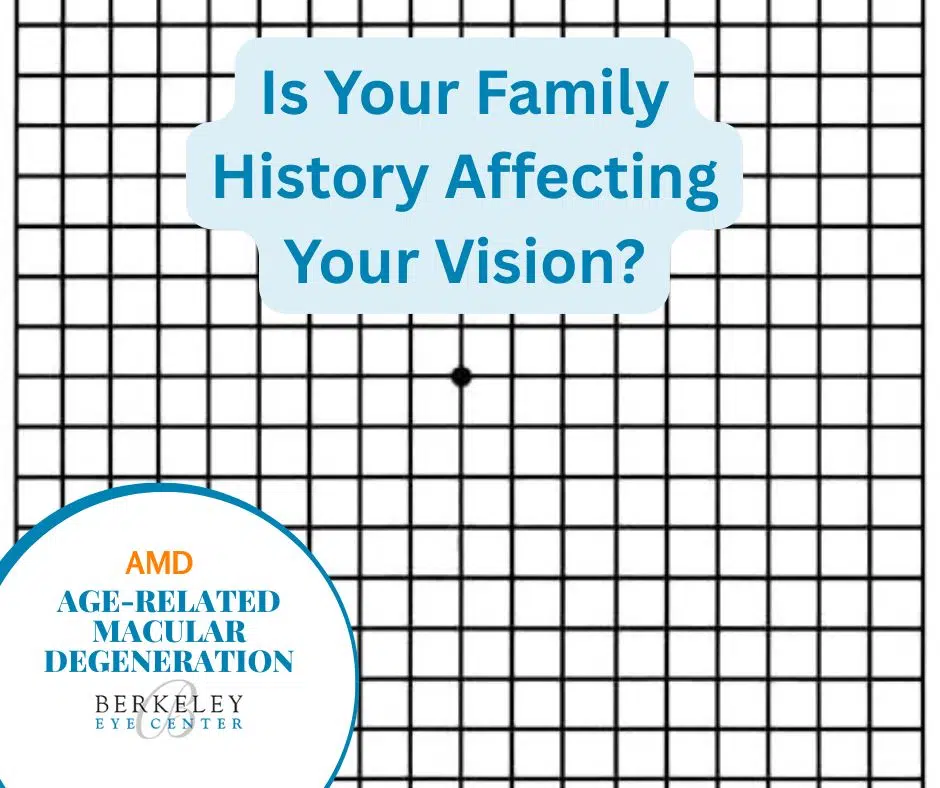
You can perform a simple, yet sensitive test at home — the Amsler grid. Perhaps your doctor has provided one, or you can easily download and print a copy at https://www.macular.org/amsler-chart.
Just follow the directions, and remember to test one eye at a time. The grid is designed to detect small changes in our central vision, specifically the type of distortion produced by macular degeneration.
If you have AMD risk factors or early AMD, check the Amsler grid daily with each eye separately. Any new distortions, wavy lines, missing areas, or blank spots warrant immediate contact with your eye doctor, as these can indicate wet AMD development or progression requiring urgent treatment.
Regular Eye Examinations: Your Best Defense
The only reliable way to detect AMD in its earliest, most treatable stages is through routine comprehensive dilated eye exams. These examinations are critical for:
- Earlier detection of disease
- Monitoring any progression
The eye doctor can generally see signs during a regular dilated eye exam of early macular degeneration prior to the patient reporting any visual symptoms. Additionally, newer testing and imaging devices such as Optical Coherence Tomography (OCT) can detect other early signs and markers of disease.
Recommended exam frequency:
- Age 40-45 with family history: Begin baseline screening
- Age 50-64 with no risk factors: Every 2-4 years
- Age 65+ or with family history: Every 1-2 years (or as recommended by your doctor)
- If you have early AMD: More frequent monitoring as directed
Early detection leads to more effective monitoring of progression, earlier intervention, and more timely treatment of high-risk individuals. Much of the vision loss associated with AMD is permanent and irreversible; therefore, it is key that patients be monitored regularly and treatment started early in the disease process.
When detected early, current AMD treatments can help 85-90% of patients maintain their current vision levels and prevent severe vision loss.
Expert AMD Care at Berkeley Eye Center
Berkeley Eye Center’s board-certified ophthalmologists and retina specialists have extensive experience in AMD diagnosis, monitoring and treatment. Our practice utilizes advanced diagnostic imaging including OCT and fundus photography to detect the earliest signs of macular degeneration, ensuring our patients receive timely, evidence-based care.
With 25+ convenient locations throughout Houston and the greater Texas area, Berkeley Eye Center makes comprehensive AMD screening and expert retina care accessible close to home. For 65+ years, we have been dedicated to protecting and preserving the vision of Texans.
Living with Age-Related Macular Degeneration
AMD causes vision loss but not necessarily total blindness. Most patients retain their peripheral vision. Daily activities such as driving, reading, watching television, using a computer, and going up and down the stairs can be a challenge. However, with a little preparation and perseverance, anyone can learn to live with the symptoms of age-related macular degeneration.
Changes Around the Home
There are many things you can do to make it easier to get around the house and perform your daily activities:
Safety Modifications:
- Get rid of low furniture, movable rugs, and clutter to reduce fall risks
- Avoid fire hazards by using a microwave instead of an oven or stovetops
- Apply large print labels to identify medications and other household items
- Install brightly colored carpeting with contrasting colors to make things more visible
- Make sure thresholds are flush with the floor (no bumpy transitions between rooms) and remove interior doors
- If stairs are unavoidable, mark each step with bright tape or paint them contrasting colors
- Install grip bars near toilets, showers and bathtubs
- Buy skid-free bathroom floor mats in bright colors
Lighting Improvements: Proper lighting plays a big part in making your home safer:
- Use bright light bulbs and lamps that can be swiveled or moved to direct light where needed
- Install night lights throughout your home
- Reduce glare effects with drapes, blinds or tinted/polarized glass
- Choose furnishings with a flat or matte finish to minimize glare
Technology and Reading:
- Powerful glasses and magnifiers will allow you to continue reading
- Large print books are easily available from libraries and online retailers
- Audio books provide an excellent alternative
- Both Windows and Macintosh computers have controls that make it easy for visually impaired people to adjust font size and screen contrast
- The larger your computer or television screen, the better
Don’t Let AMD Get to You
It’s not uncommon for people who lose vision to go through a period of depression. Some of the ways people with AMD can cope include:
- Join an AMD support group – You’re not alone
- Participate in social media to stay connected
- Seek professional counseling if needed
- Start a hobby that works with your remaining vision
- Get out and about – Even if you can’t drive, there are alternate forms of travel such as taxis, ride-sharing services, and buses
- Reach out to family and friends for support
Frequently Asked Questions About AMD and Family History
Learn More
- A dilated exam is the key to early detection. Understand what happens during a Comprehensive Eye Exam.
- Trust your vision to our team of highly qualified Ophthalmologists.
- Find a Berkeley Eye Center location convenient to you throughout the Houston area.
Have You Noticed Changes in Your Vision?
If you are over 50 or have a family history of AMD, don’t wait for symptoms to appear. Early detection through regular comprehensive eye exams is your most powerful tool for protecting your sight. When caught early, treatments are available that can significantly slow AMD progression and help preserve your vision.
If you notice changes in your vision, don’t hesitate to contact a Houston macular degeneration specialist at Berkeley Eye Center. With 25+ convenient locations throughout Houston and the greater Texas area, expert AMD care is always close to home.